



The 2026 Black Muse Art Festival brought four days of art, critical conversations, workshops, performance and celebration to Benin City. Inspired by Ben Okri’s seminal novel Astonishing the Gods, this year’s theme, ‘For Those Who Astonish the Gods’, asked what it means to create something so unexpected, imaginative or deeply rooted in another way of knowing that it astonishes even the gods. Across the programme, we explored astonishment as both an act of invention and remembrance: creating something new, recovering forgotten knowledge and recognising the wisdom we have inherited.
From the sculptures at the Black Muse Sculpture Park and Ephraim Theophilus Ngukaam’s prize-winning “Memory of Things Once Was” to the Ázágba Pavilion, Plant Knowledge Fieldnotes workshop and celebrations of music, food and dance, the festival celebrated the many ways we can astonish the gods: by honouring our ancestors, preserving their knowledge, caring for the natural world and keeping our cultures alive.
A full breakdown of the festival highlights is outlined below.
Day One
Saturday, 7th November
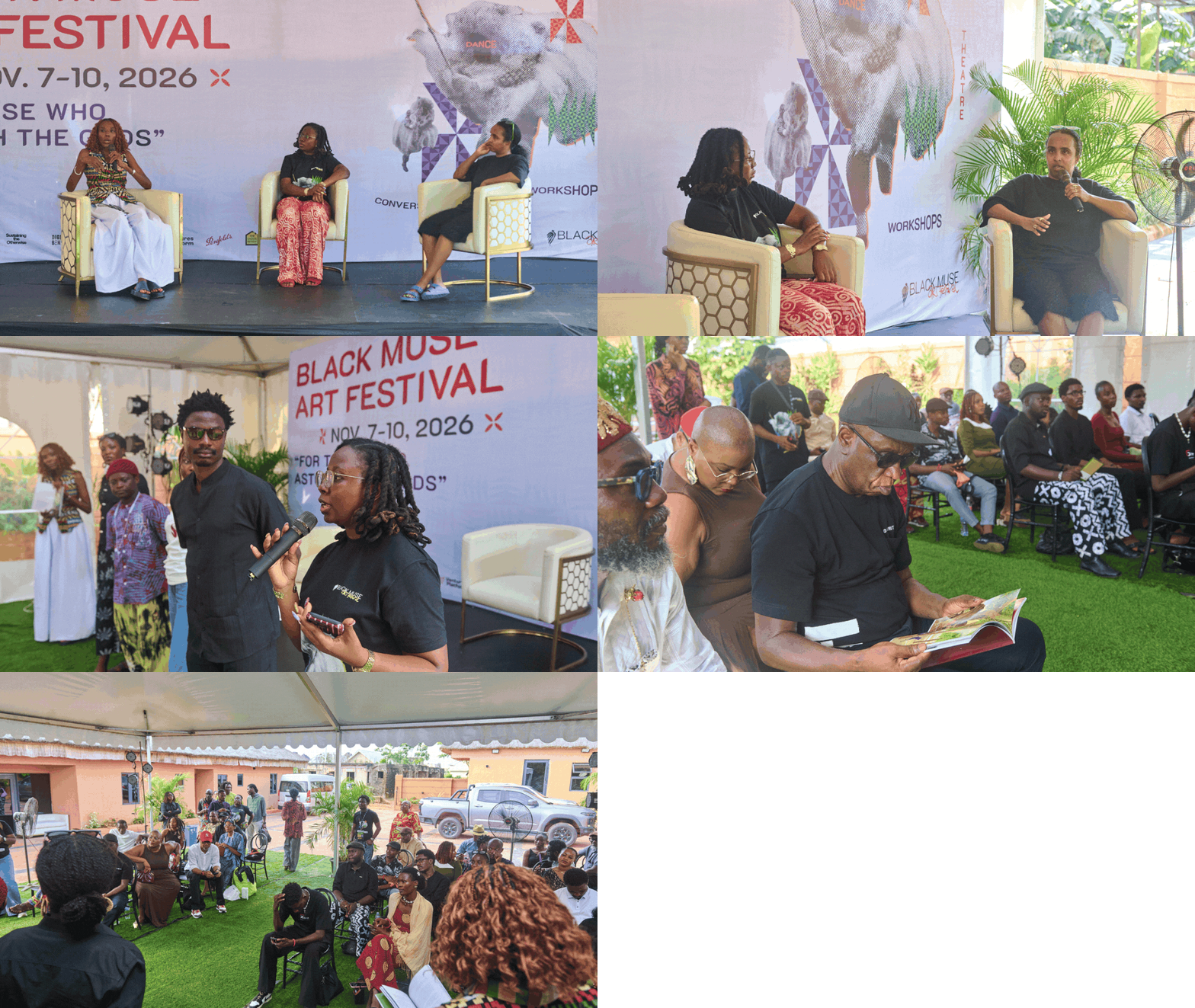
PANEL DISCUSSION
How Do We Astonish the Gods?
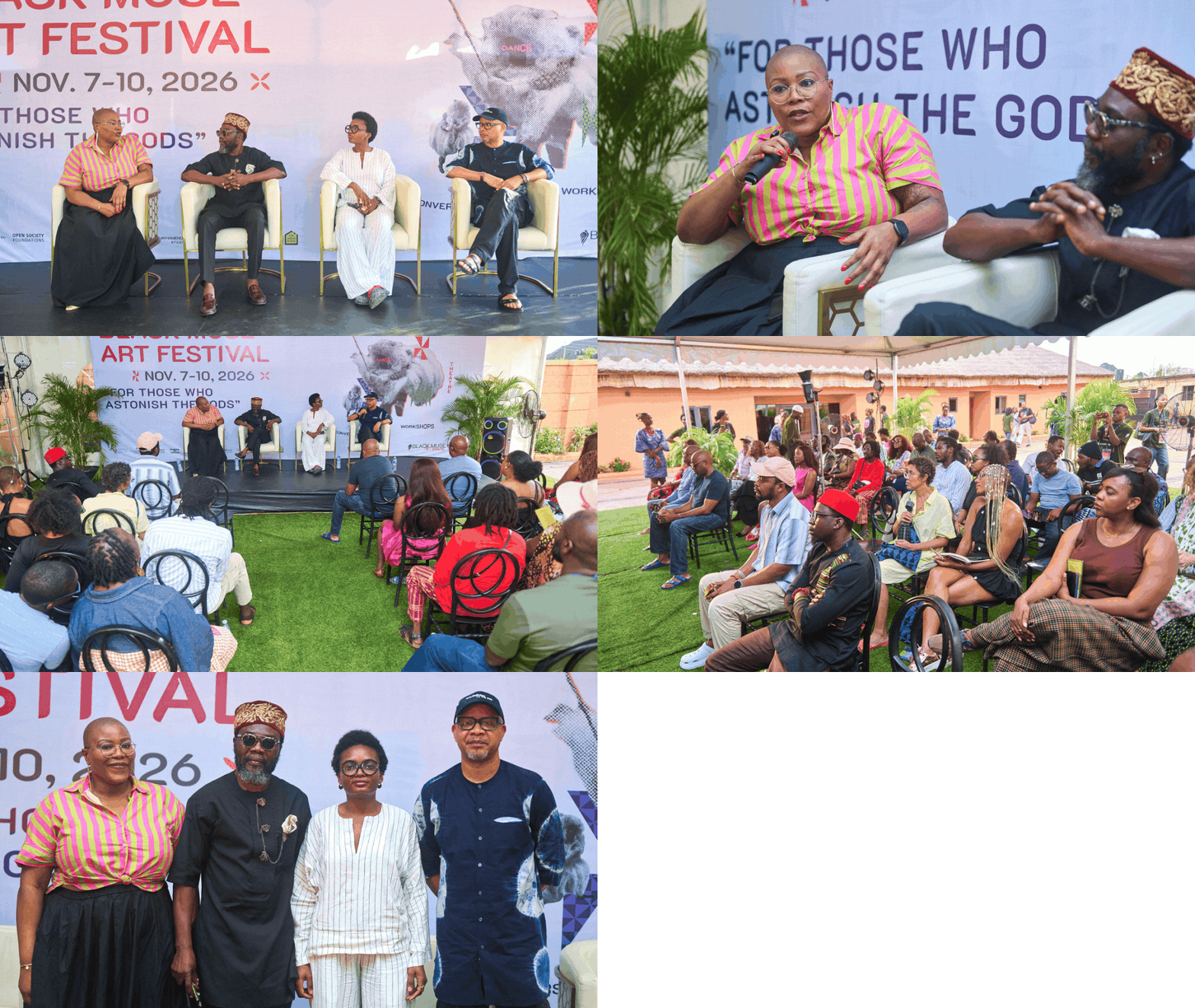
Moderated by writer, poet and curator Wana Udobang, the opening panel brought together artist and festival founder Victor Ehikhamenor, visual artist Diseye Tantua, and independent curator and art historian Aude Christel Mgba to explore the festival’s theme, ‘For Those Who Astonish the Gods’.
The discussion considered what it means to make art amid the social and economic realities of contemporary life, and the conditions under which artists create, sustain their practices and imagine new possibilities. One of the panel’s central questions came from Udobang: “How do you create work that astonishes the gods when you dey find food to chop?” The question brought the festival’s philosophical theme into conversation with the everyday realities of making a living as an artist.
PRESENTATION
Andrea Chung
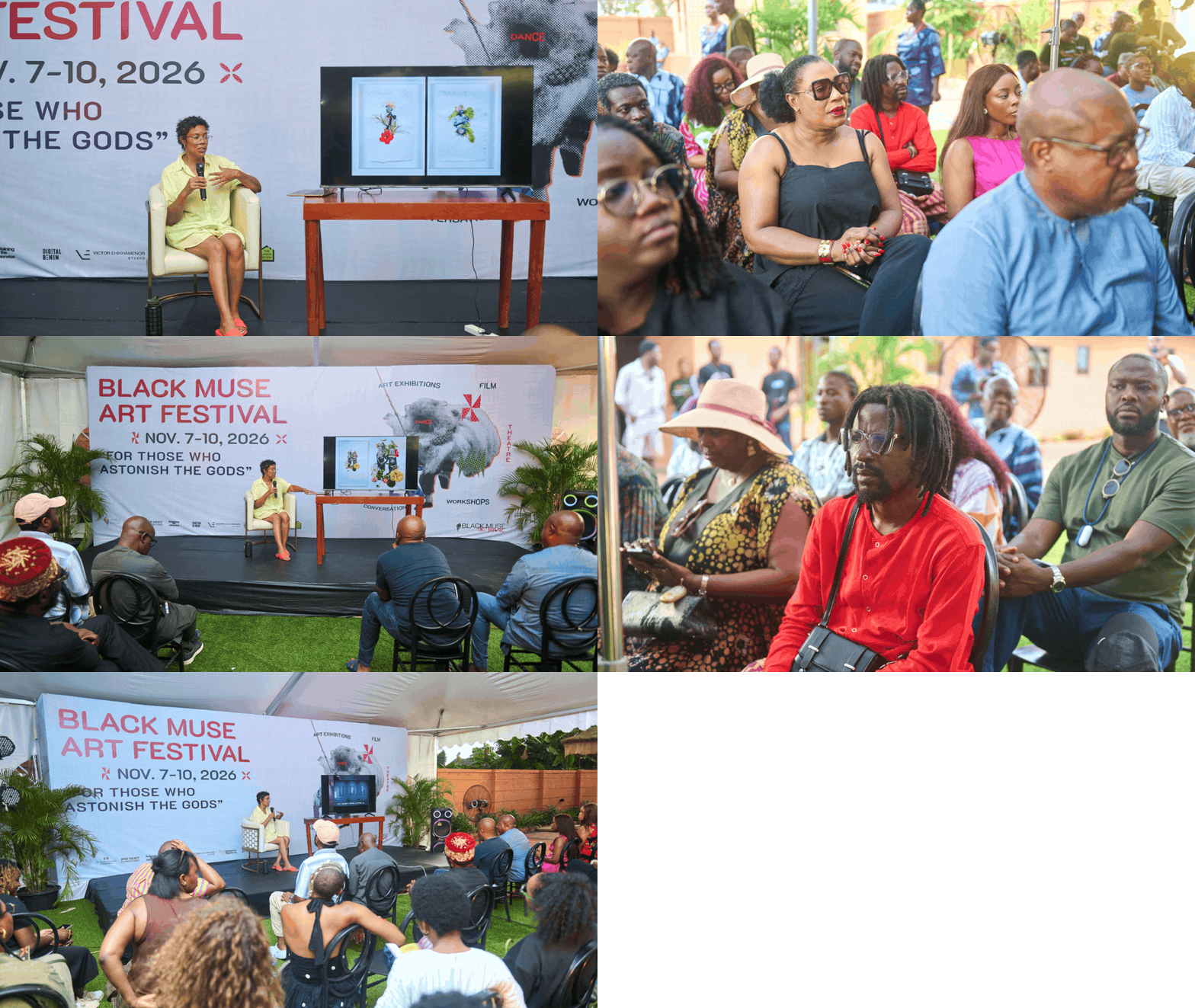
Artist Andrea Chung presented an overview of her artistic practice: lithograph and cyanotype works through which she examined colonisation, its historical legacies and the experiences of African and Caribbean diasporic communities.
Her presentation explored how art can engage with the histories and lasting consequences of the transatlantic slave trade, particularly the challenge of representing the scale of loss and preserving histories that have been fragmented or obscured. Chung also discussed her use of colour, including vibrant indigo and warm amber, her material choices, and the symbolism of the invasive lionfish within Caribbean aquatic ecosystems.
PANEL DISCUSSION
Institutional Collaboration Across Geographies
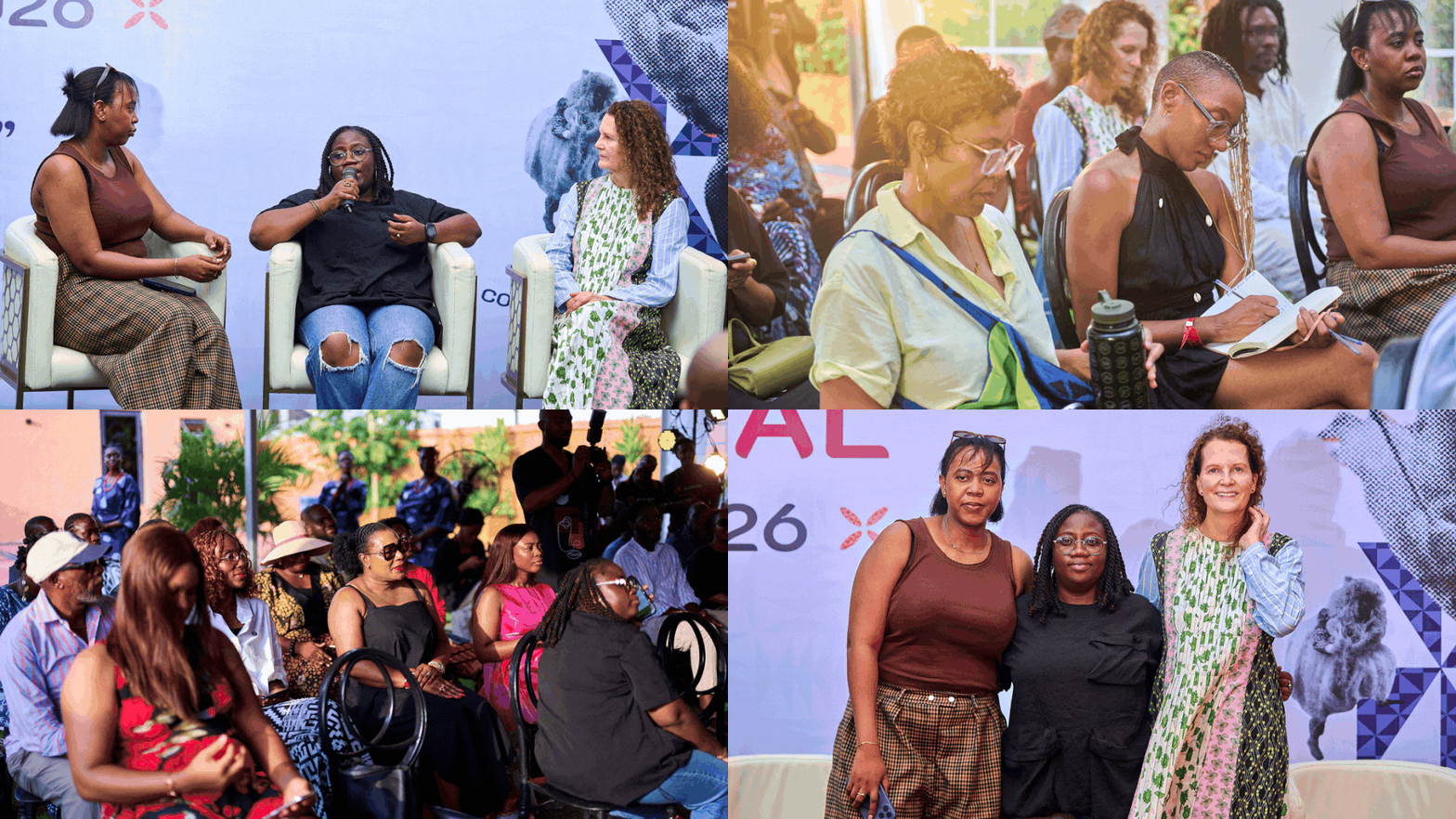
Moderated by Kovie Parker, this panel featured Roli O’tsemaye, Program Director at Angels & Muse, and Selene Wendt of Sustaining the Otherwise.
The conversation examined the possibilities and complexities of collaboration between cultural institutions across geographical boundaries. Drawing on their experiences, the speakers considered the challenges facing arts organisations, the importance of shared resources and knowledge, and how meaningful institutional partnerships can support cultural work across different contexts.
BLOCK PARTY
A Celebration of Culture, Community and Heritage
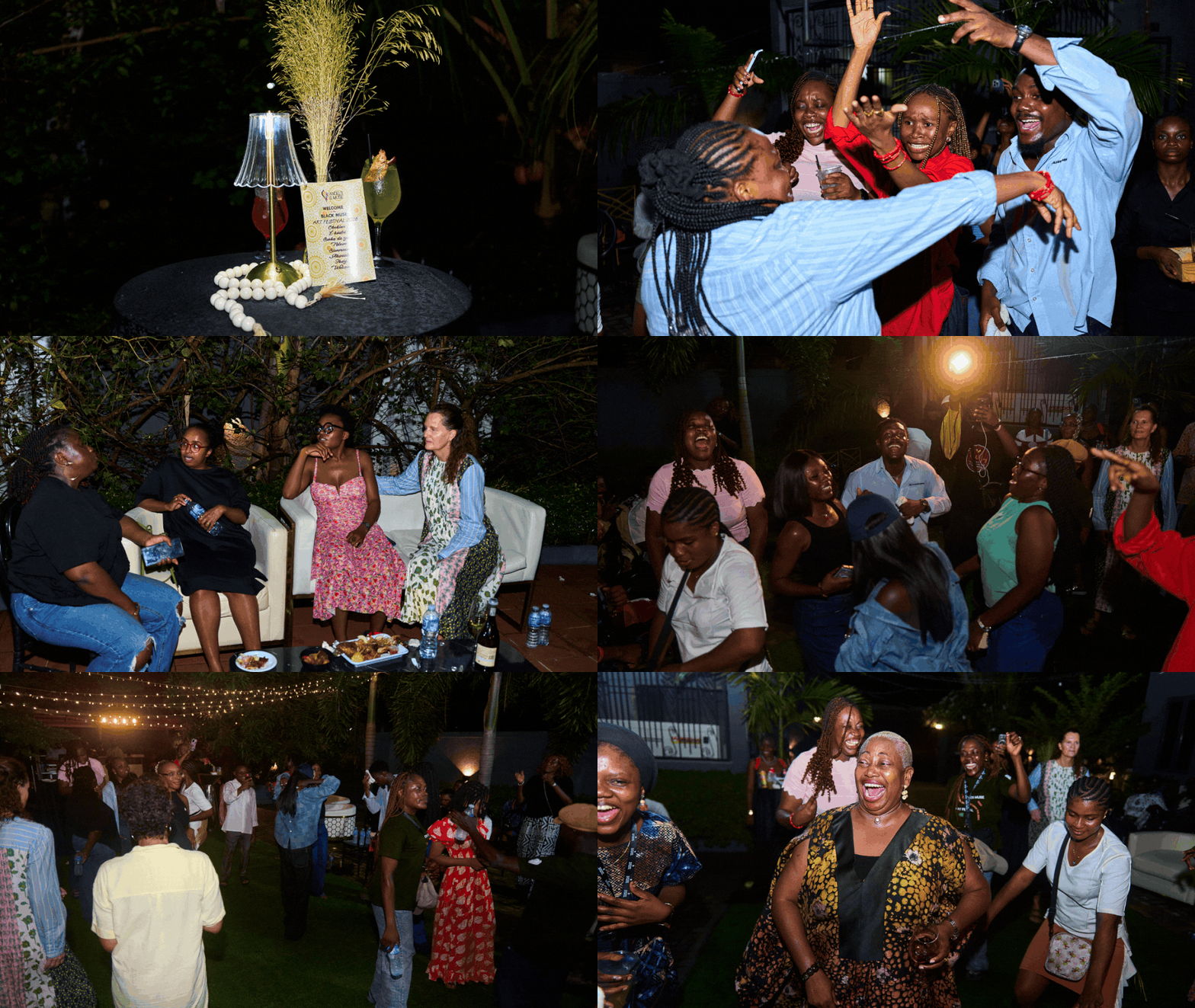
The first day concluded with the Black Muse Block Party, bringing together festival participants, local residents and visitors for an evening of music, food, dance and conviviality.
The gathering created space for cultural exchange and community celebration, with traditional palm wine, food, music and dance bringing together different generations and cultural expressions. The evening moved between traditional and contemporary forms of celebration, offering an opportunity for festival-goers to connect beyond the formal programme.
Day Two
Sunday, 8th November
WORKSHOP
Paper Making Workshop
Participants explored the process of transforming discarded denim into handmade paper in a workshop led by artist Ọmọlará Williams McCallister.
The session introduced participants to the stages of papermaking, from washing and shredding denim into fibres to processing the material into pulp and forming sheets with moulds and deckles. After pressing and drying, the handmade paper became a surface for drawing. The workshop offered a practical exploration of material reuse, sustainability and the creative possibilities of recycled textiles.

ON PUBLISHING AND ARCHIVING · PANEL DISCUSSION
For God’s Sake, If Not a Book, Then What?
Moderated by Angel Akua, the panel featured Esinam Damalie and Amal Alhaag, who explored alternative approaches to publishing, archiving and preserving cultural knowledge beyond conventional written formats.
The conversation considered how knowledge is recorded, transmitted and sustained through different media and practices. Among the discussions was the role of culinary traditions and baking as forms of cultural archive, demonstrating how memory and knowledge can be preserved through embodied practices, everyday rituals and forms of transmission that do not necessarily rely on books.
EXHIBITION OPENING
Black Muse Sculpture Park Exhibition: What Seeks Us Is Better Than What We Seek
Curated by Esinam R. Damalie | Assistant Curator: Paul Ayihawu
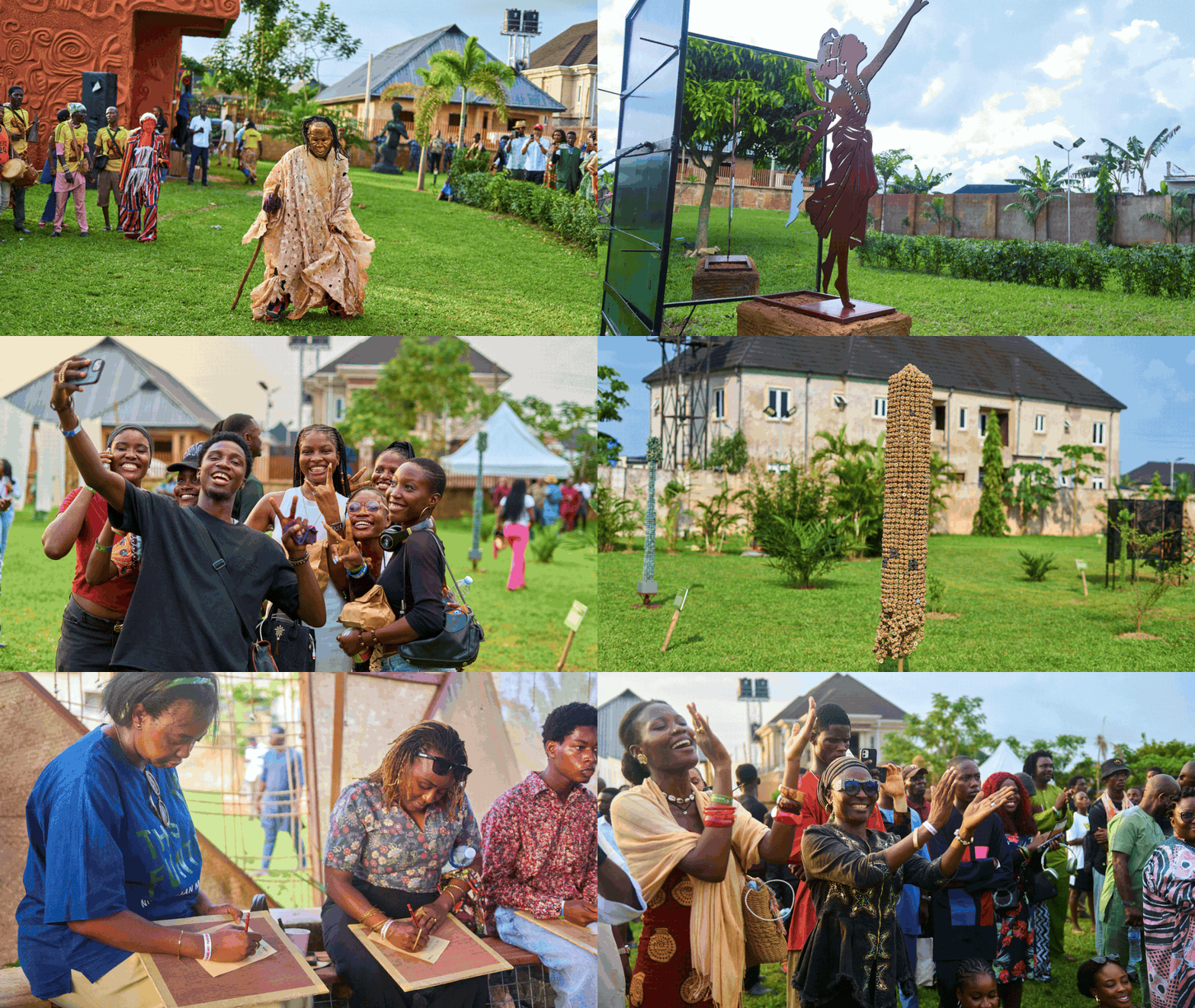
The Black Muse Sculpture Park officially opened with remarks from founder Victor Ehikhamenor and assistant curator Paul Ayihawu, alongside a musical performance by Onyebeat and the Beatoven Ensemble.
Curated by Esinam R. Damalie, the exhibition features works by Badru Taofeek Abiodun, Ohiolei Ohiwerei, Jonathan Chinedu Chambalin, Haneefah Adam, Ephraim Theophilus Ngukaam and Olumide Onadipe. Their sculptures engage with questions of memory, identity, spirituality, authority, transformation and the relationship between people and their environments.
The opening also featured special projects by Wana Udobang, Ofem Ubi and Ruona Idjenughwa. The evening concluded with the presentation of the Black Muse Patron’s Prize to Ephraim Theophilus Ngukaam for his work “Memory of Things Once Was”, followed by closing remarks from Roli O’tsemaye.
THEATRE PERFORMANCE
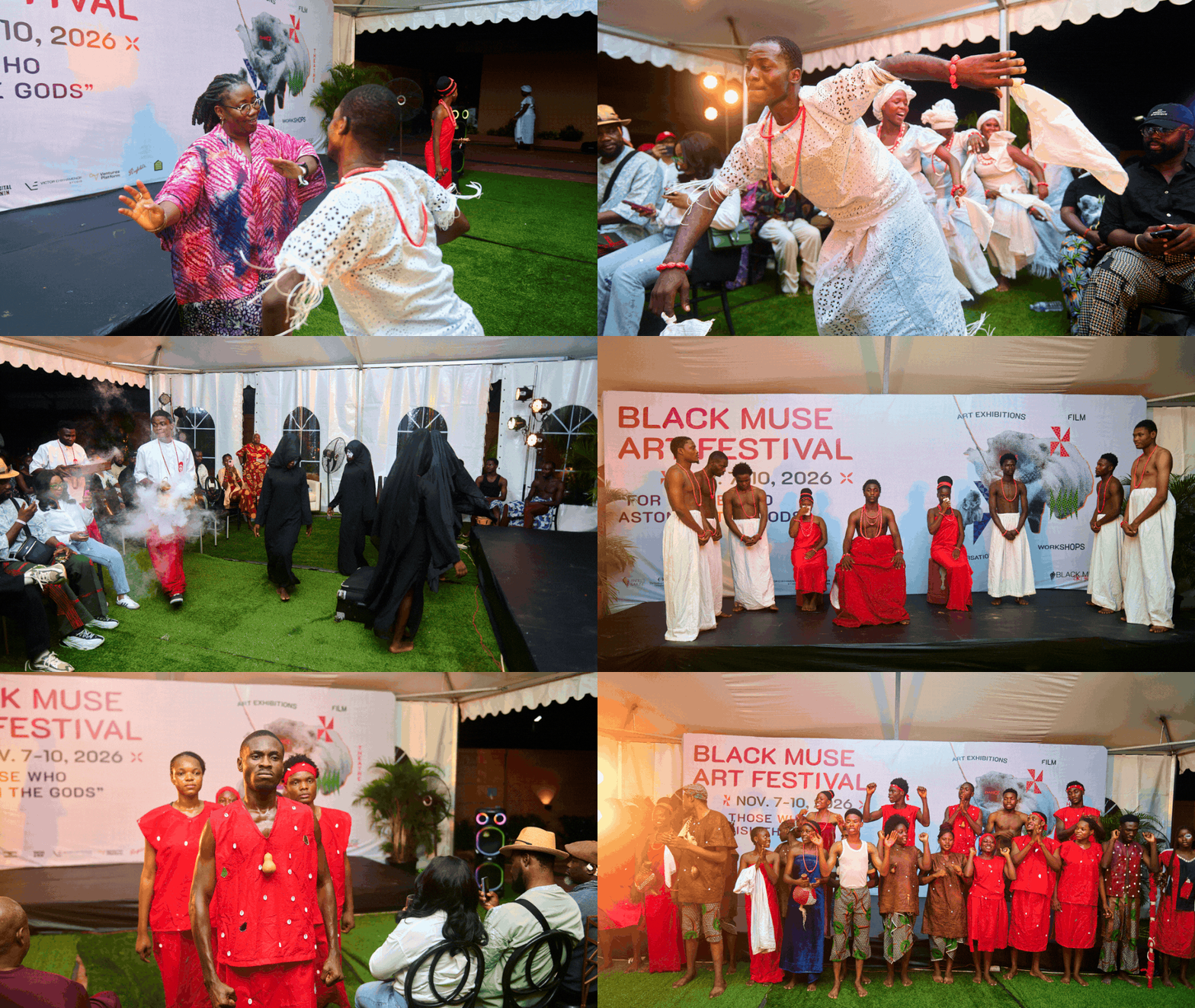
Izigha
Presented by the University of Benin, Department of Theatre Arts
Izigha brought Benin’s history and cultural traditions to the stage through a theatrical retelling of the historical victory of the Oba of Benin over Akure.
The performance offered an exploration of historical memory through theatre, demonstrating how performance can bring inherited narratives into the present and create new ways for audiences to encounter and engage with cultural heritage.
Day Three
Monday, 9th November
WORKSHOP
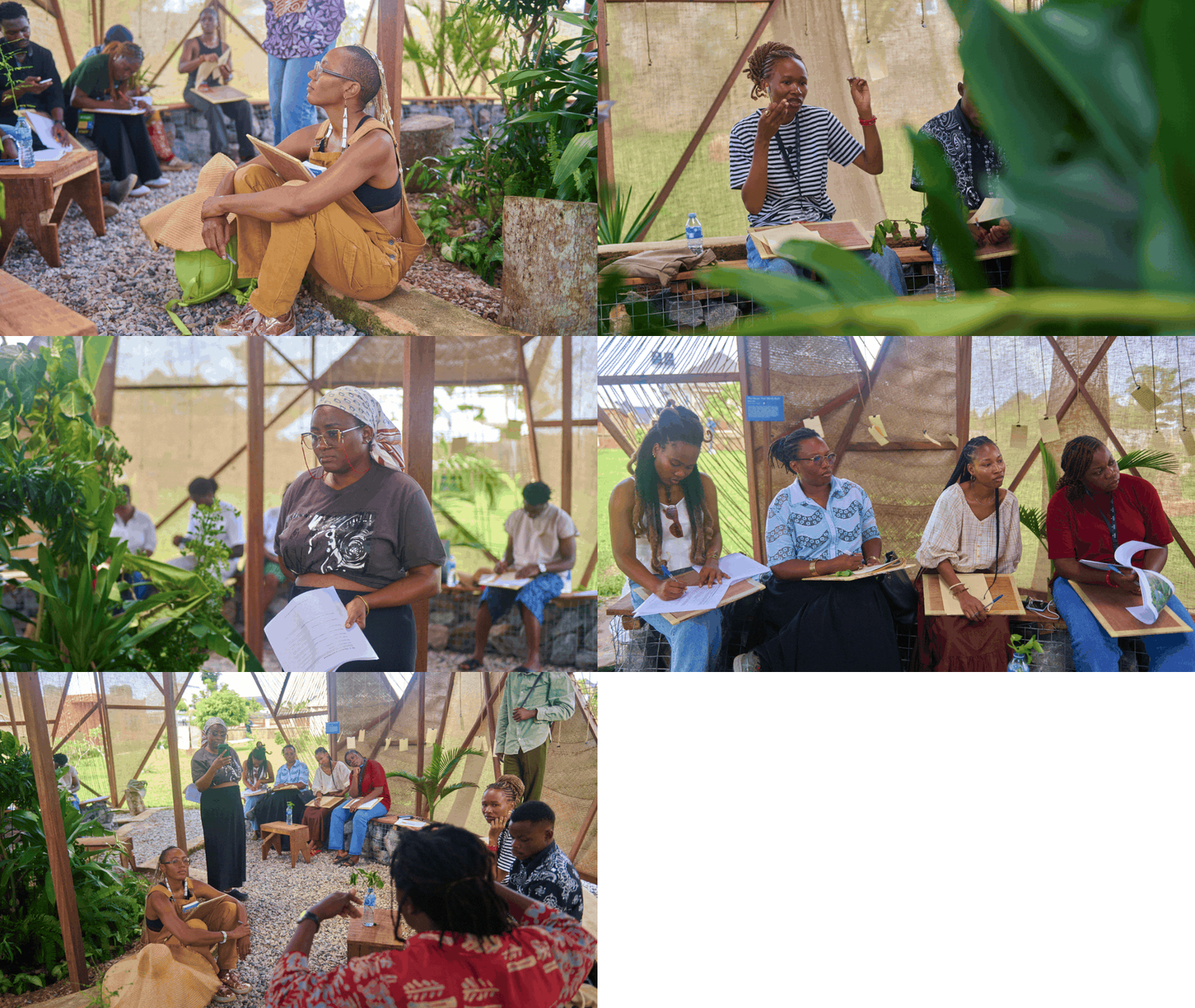
Plant Knowledge Fieldnotes
The Plant Knowledge Fieldnotes workshop, facilitated by Tobiloba Akibo, invited participants to reconnect with indigenous botanical knowledge and the memories associated with plants encountered in everyday life.
Through discussions of indigenous plants, herbs and weeds, the session explored their medicinal, cultural and practical uses, including the knowledge passed down through families and communities. It also considered the importance of preserving ethnobotanical knowledge and the relationships between people, plants and their environments across generations.
COMMUNITY OUTREACH
School Visits and Book Drive
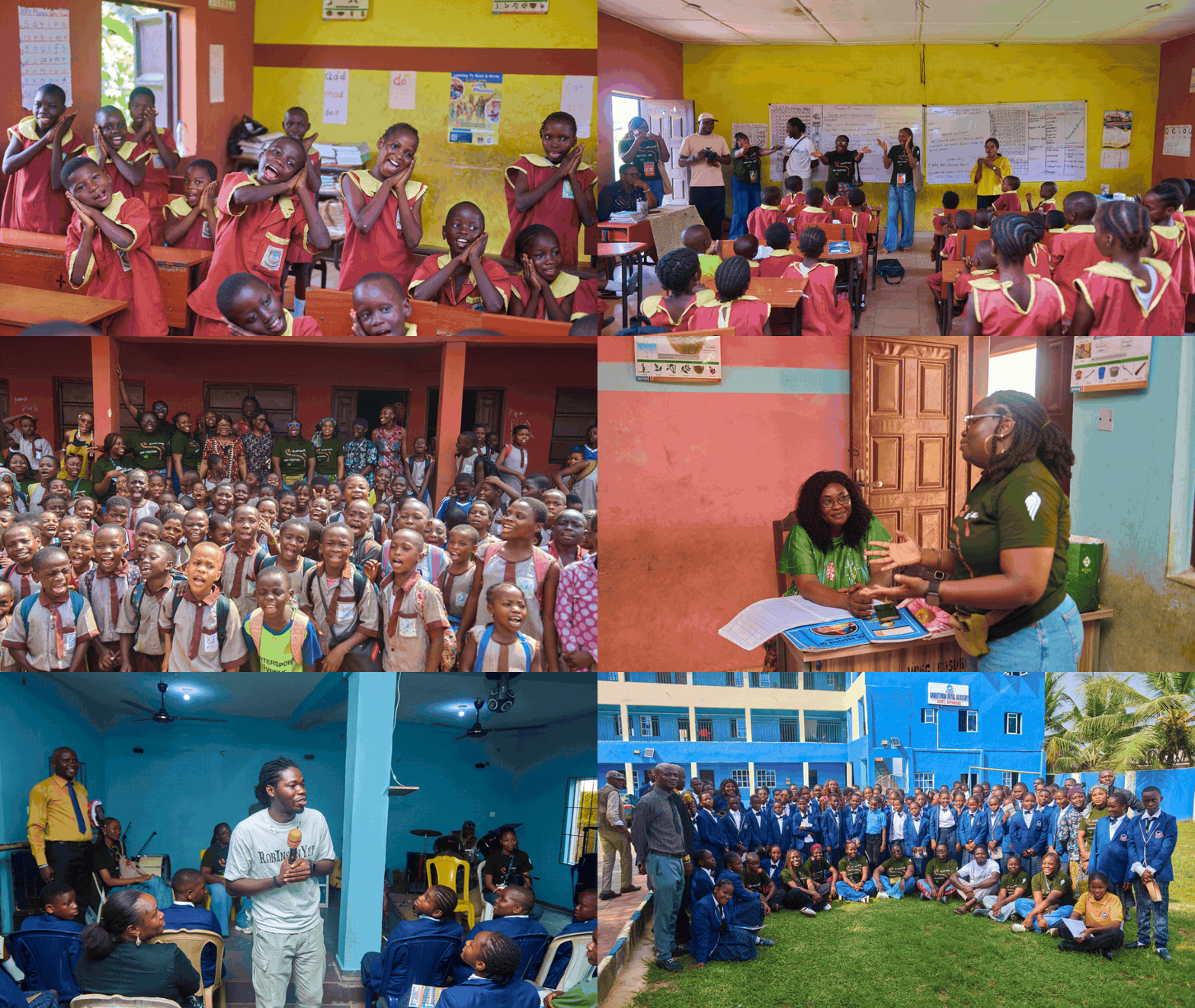
As part of the festival’s community outreach programme, the team visited Akenzua Primary School, Ebo Primary School and Brightview Royal Academy.
The visits included book donations, interactive sessions with pupils and conversations encouraging curiosity, reading and creative exploration. The initiative extended the festival’s programme beyond its main venue, supporting access to books and creating opportunities for young students to engage with art, culture and learning.
FILM SCREENING
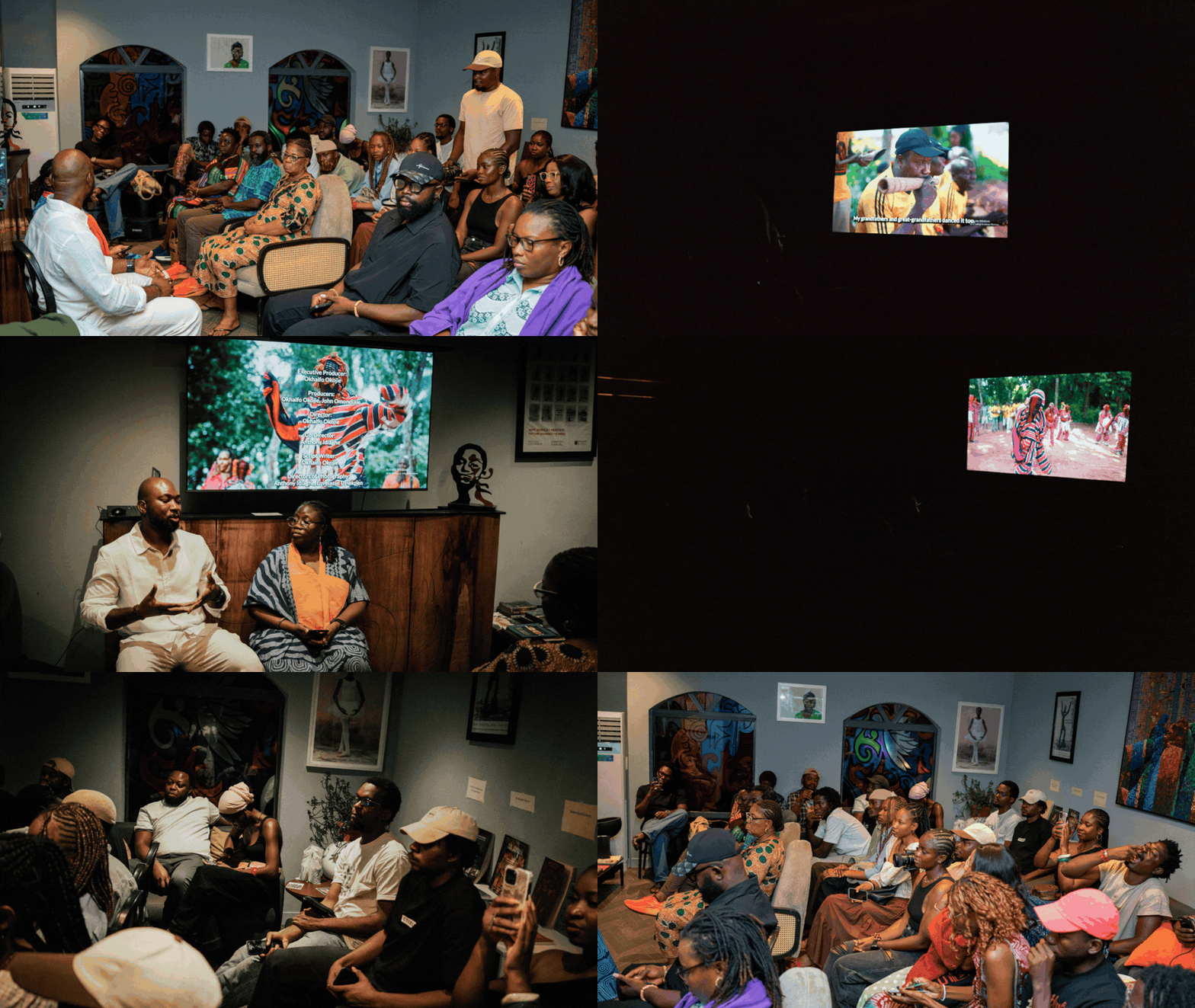
Rhythm of the Spirits by Okhaifo Okojie
In conversation with Roli O’tsemaye
The festival screened Rhythm of the Spirits, a short film by director Okhaifo Okojie exploring Igbabonelimhin, a traditional acrobatic art form of the Esan people of Edo State. Tracing the practice from its associations with observations of nature and hunting to its contemporary expressions during festive celebrations, the film examined the cultural significance of Igbabonelimhin and efforts to sustain its traditions among younger generations.
Day Four
Tuesday, 10th November
WORKSHOP
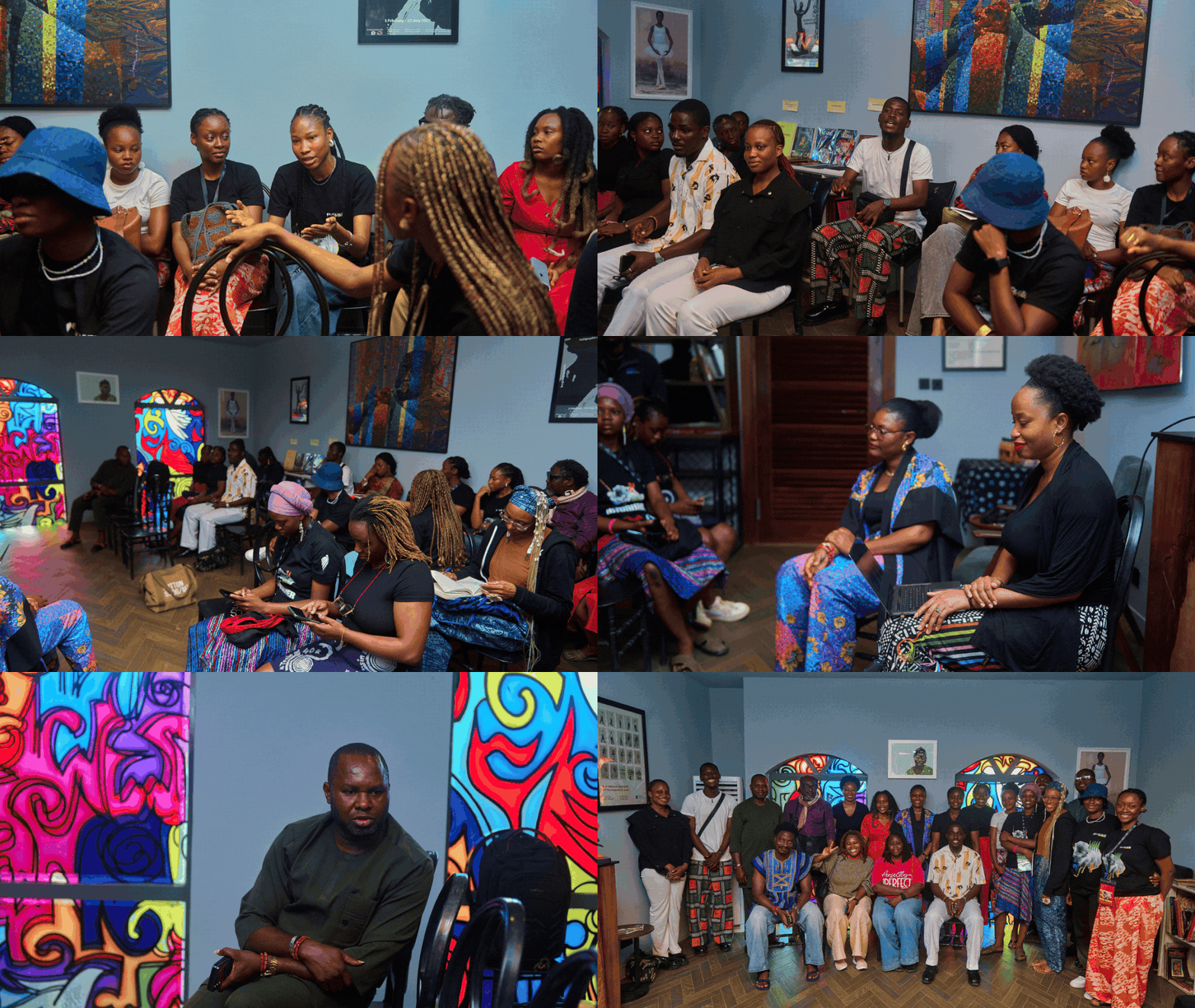
Digital Archiving Workshop
The Digital Archiving Workshop introduced participants to Digital Benin, an international digital initiative documenting and reconnecting records, objects and histories associated with the Benin Kingdom, including artworks dispersed following the 1897 British invasion.
The presenters demonstrated how the platform provides information about individual objects, including Edo names and pronunciations, historical locations, provenance and cultural context. The session explored the possibilities of digital archives as tools for research, historical recovery, cultural preservation and wider public access to knowledge.
SCHOOL VISITS
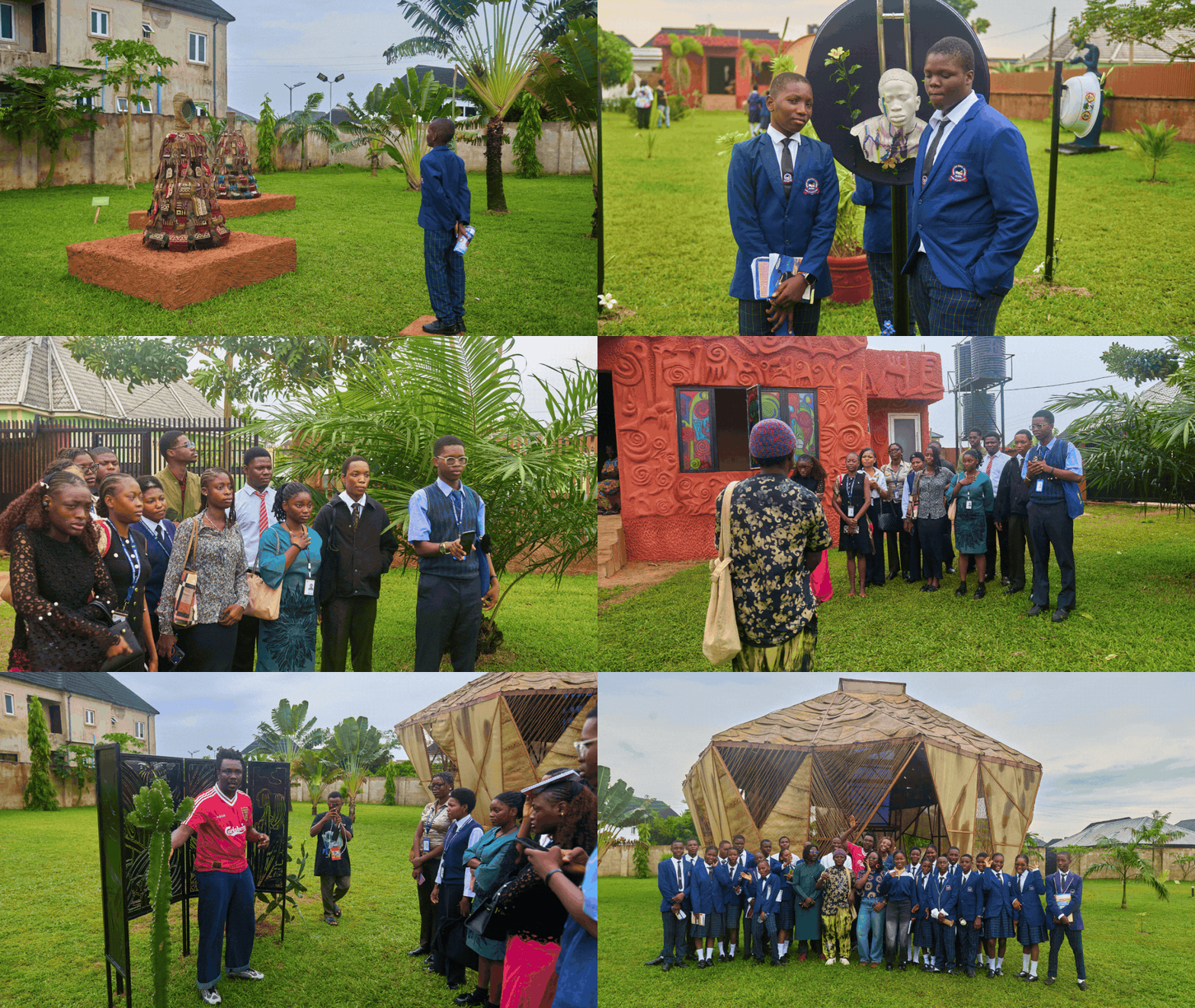
Black Muse Sculpture Park
Damalies from Brightview Royal Academy and Benson Idahosa University visited the Black Muse Sculpture Park for a guided exploration of the exhibition.
Guided by assistant curator Paul Ayihawu, the students encountered the sculptures and installations across the park, engaging with the works and their ideas. The visit concluded with a reading from Ben Okri’s Astonishing the Gods by exhibition curator Esinam R. Damalie, returning to the literary inspiration behind this year’s festival theme.
CLOSING EVENT
Chop & Yarn: An Edo Food Encounter & Open Mic
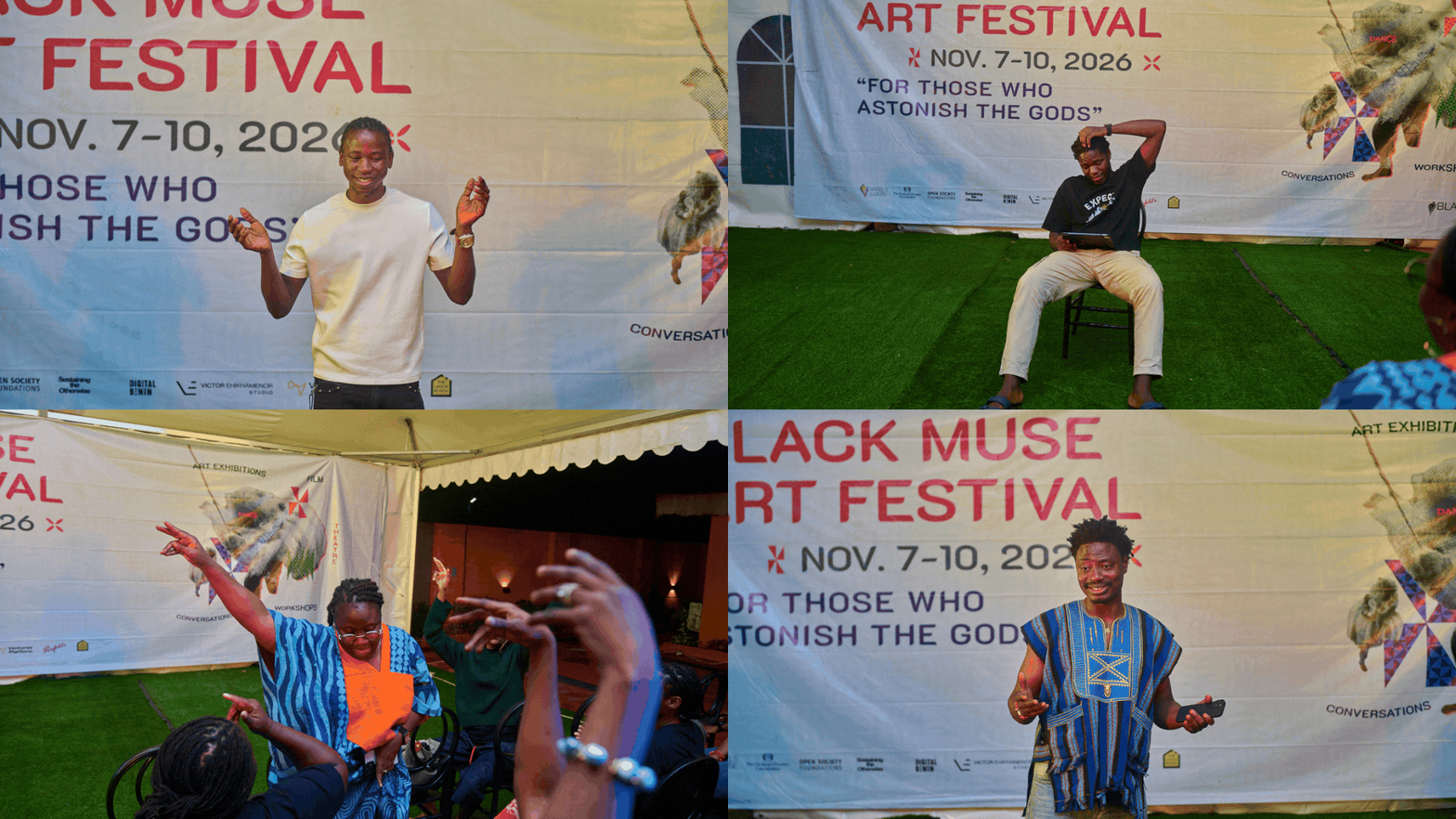
The festival concluded with Chop & Yarn, an evening of food, poetry, open-mic performances, karaoke and dancing.
Bringing people together over local dishes, including nkwobi and palm wine, the gathering celebrated Edo food traditions, music, storytelling and the communal experience of sharing a meal. It offered a fitting close to four days of artistic programming, cultural exchange and community gathering.
Acknowledgements
The 2026 Black Muse Art Festival was made possible through the support of our partners, collaborators, participating artists, facilitators, institutions, volunteers, community members and audiences.
We extend our sincere appreciation to The Osahon Okunbo Foundation, Penfolds, Ventures Platform, Open Society Foundations, Digital Benin, Angels & Muse, Sustaining the Otherwise, Victor Ehikhamenor Studio, The Lagos Review and Clase Azul for their support and contributions to this year’s festival.
We are grateful to everyone who participated in, supported and contributed to the programme, and to the communities of Benin City who welcomed us throughout the festival.